21 Apr, 2026
I Walked Into Poker Knowing Almost Nothing and Somehow Left With Four Times My Deposit
Full honesty here. Three months ago I did not know what a continuation bet was. I had a rough idea that Poker involved cards and chips and that bluffing was a thing that happened. That was the entirety of my knowledge when I sat down at the Cash Arena Poker table for the first time.
What followed over the next ninety minutes is something I still talk about.
I started at the lowest stakes available because I was not feeling particularly brave and I wanted to figure out how things worked before committing to anything serious. My plan was basically to just watch for a while. So I folded a lot. Maybe seven out of every ten hands in those first twenty minutes, I just folded and paid attention to what was happening.
And that watching turned out to be the smartest thing I did all session.
I started seeing patterns in how the betting rounds worked. I noticed that players who raised aggressively before the flop usually had something worth raising with. I noticed that when someone checked twice in a row and then suddenly fired a huge bet on the river, it did not always mean they had the best hand. I could not name any of what I was observing but I was absorbing it.
Then I was dealt pocket Aces.
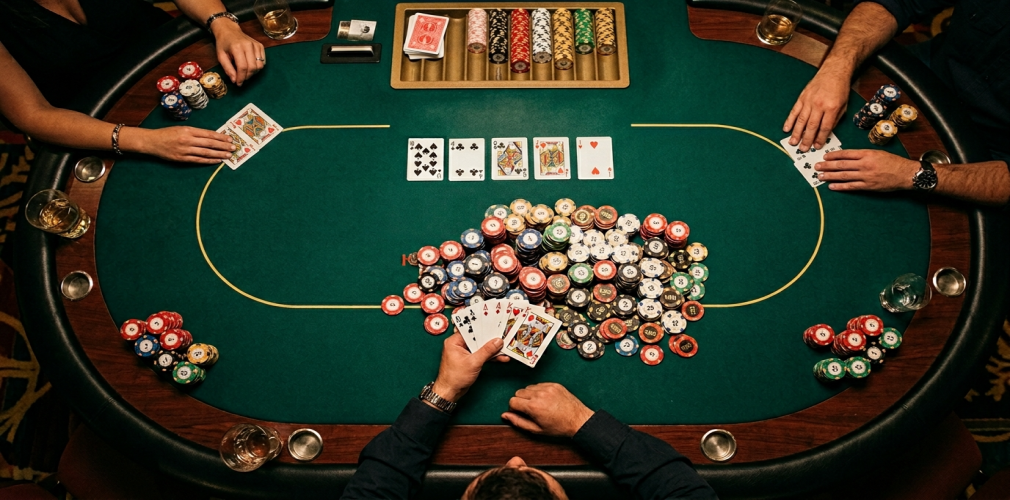
I had read enough to know these were the best two cards you can start with in Texas Hold'em. I raised before the flop. One player called, everyone else folded. The three community cards that came out were an Ace, a 5, and a 7. I had just made three of a kind with the best possible trips.
I played it slow. I checked instead of betting, giving my opponent the chance to take the lead. They bet. I called quietly. The next card was another 5, which meant I now held a full house. I checked again. They bet bigger this time, clearly feeling confident. The final card changed nothing about my hand. They put in a large bet. I raised everything.
They called. They had two pair. My full house won the pot.
My stack tripled on that single hand. I sat there rereading the result screen multiple times just to make sure it was real.
What makes Poker so different from every other game on Cash Arena is that you are not playing against the house in the traditional sense. You are playing against other people and the quality of their decisions. The platform takes a small fee from each pot but the money you win comes directly from the players who made weaker choices than you did at the right moments.
This means that over time, consistently better decision making produces consistently better results. It does not require perfect cards. It requires understanding when your hand is stronger than your opponents likely realize, when to apply pressure and when to back off, and how to read the story that the betting is telling.
Position at the table matters enormously. Being able to act after your opponents in each betting round gives you information they do not have when it is your turn. Early position hands should be played conservatively. Late position hands can be played with much more confidence and creativity.
For newer players the single most powerful adjustment is simply playing fewer hands. The instinct is to stay involved and see as many flops as possible. The reality is that patience and selectivity are what keep your bankroll alive long enough for the good hands to arrive.
When they do arrive, you want chips to play with.